



10 priorities to transform European manufacturing


4 March 2026
Share




The European manufacturing industry is under pressure from all sides. Disruptive supply chains and geopolitical shifts call for onshoring and securing new trade partnerships. Europe’s ageing population and rapid technological advancements push for automation and upskilling to operate in sync. At the same time, meeting environmental goals and adopting sustainable solutions bring efficiency but require scale.
Strengthening innovation capacity is no longer optional for European manufacturing — it is essential to remain competitive and secure its technological sovereignty. To navigate this complexity, EIT Manufacturing’s Industrial Innovation Report 2026 examines five strategic sectors where these pressures are most acute: aerospace and defence, automotive, clean technologies, electronics and semiconductors and energy-intensive industries.
Beyond sector-specific analysis, the report takes a cross-sector perspective, synthesising insights across industries to define 10 manufacturing priorities for the near- to medium-term future. These priorities translate strategic needs into actionable areas for innovation, deployment and targeted investment.
In the following sections, we break down each priority, highlighting the most relevant solution clusters, emerging technologies from the EIT Manufacturing community and their primary applications.
Manufacturing lightweight and sustainable products
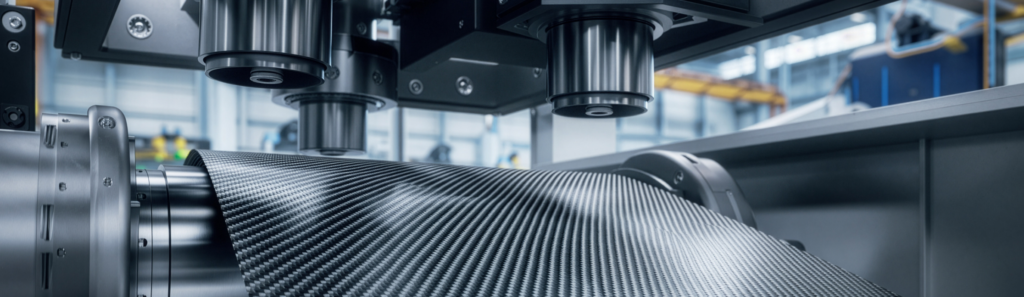
European manufacturing industries increasingly struggle to scale composite production cost-efficiently and sustainably, independently of offshore production. Traditional composite manufacturing is slow and labour-intensive, relying on cutting and machining sheets of fibres that generate high material waste, increase production costs and limit recyclability.
Today, manufacturers who need lightweight composite components at scale face a difficult choice: absorb the economics of conventional manual production; outsource to Asia (and accept longer lead times and supply chain risks); or stick to metals and accept the weight penalty.
Bosse Rothe Frossard, CEO & Co-Founder of Holy Technologies
This is where Holy Technologies steps in — bringing composite manufacturing back to Europe. The startup replaces waste-intensive manual processes with robotic precision and speed. This allows manufacturers to produce composite components at up to 50% lower cost, up to 30% lighter and fully waste-free, 100% recyclable production.
“Our ambition is to become the sovereign European alternative: the go-to supplier for manufacturers who need high-performance lightweight components produced efficiently and locally. Europe has the engineering talent, the industrial base and the capital to lead this transition. What it needs is the production technology to make it economically viable. That is what we are building”, – Rothe Frossard shares his vision for Holy Technologies.
The technology targets two distinct transitions: replacing manually produced composites where scale is needed but manual economics no longer hold — relevant across orthopaedics and automotive — and enabling metal-to-composite transitions for manufacturers like industrial tool makers who need a lighter component but have had no cost-efficient path to get there.
“The urgency is real”, stresses Rothe Frossard. Global demand for lightweight components is accelerating rapidly. Constrained by energy, cost and emissions, lightweighting is becoming a decisive driver of industrial competitiveness.
Rothe Frossard believes ‘autonomy is the decisive lever’: a software-defined manufacturing system that can perceive, decide and adapt in real time — the principle behind their patented Infinite Fiber Placement (IFP) technology, a robotic, software-defined production system and the foundation for Holy OS, their factory operating system built for fully autonomous composite manufacturing. This removes the manual labour dependency that has kept composites expensive and difficult to scale for decades.
Within five years, the question for Europe is whether its composite manufacturing will have the capacity to meet that demand locally or continue ceding ground to overseas production.
urges Bosse Rothe Frossard, CEO & Co-Founder of Holy Technologies
Connecting and digitalising factory ecosystems
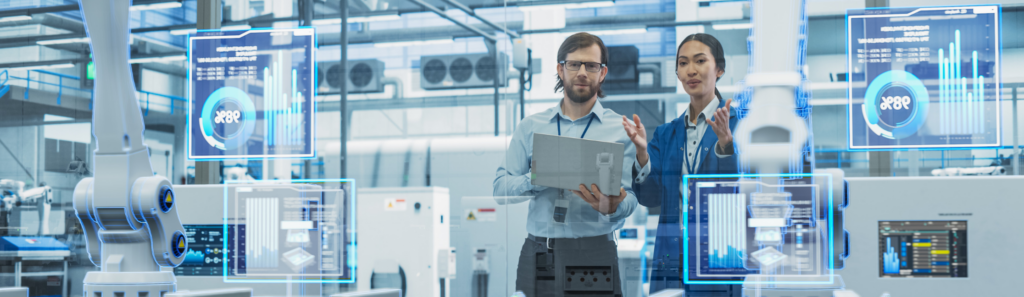
Manufacturers require seamless integration of legacy and new assets to enable real-time data flow, predictive control and eventually, autonomous operations across the production environment. However, data silos, fragmented tools and complex solutions that require tech expertise often limit end-to-end digitalisation, slowing down or making it challenging to turn data into actionable insights. A key challenge lies in optimising operations across processes and production sites, which requires interoperable data, standardised formats and consistent communication protocols.
To address this challenge, smartFAB joined forces with BIBA, Beko Europe, BIC Violex, Dana Italia and Goodyear as part of the AI Industrial Analytics project. Together, the partners worked to advance smartFAB’s solution to Technology Readiness Level (TRL) 8, enabling connected, data-driven factories. The solution is ideal for industrial environments, such as automotive components and consumer goods, as it combines real-time analytics with human-centric AI approaches to identify bottlenecks, support root-cause analysis and guide corrective actions directly on the shop floor.
Implementing intelligent and agile automation for complex, variable and custom tasks
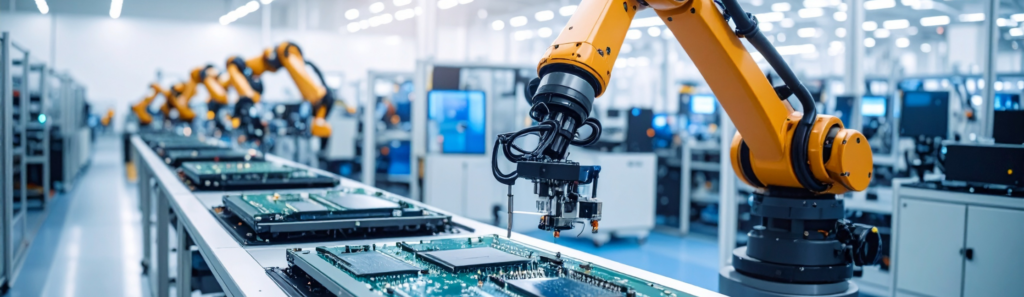
Modern manufacturing requires fundamental changes in both operations and workforce capabilities to embrace intelligent automation. However, automating complex and customised tasks remains a significant challenge, especially for manufacturers handling diverse product mixes in smaller volumes.
Traditional robotic systems fall short: they lack flexibility, demand high upfront investment and require specialised expertise to deploy and reconfigure, making them ill-suited for dynamic production environments. At the same time, intelligent automation is not standing still. Next-generation robotic systems can now handle unpredictable and complex tasks, including zero-shot (ZSL) or instant learning and adapting to changing conditions in real-time.
YK-Robotics removes the expertise barrier from advanced automation. Its software-driven platform allows non-technical users to configure and operate robotic systems intuitively. The technology autonomously plans collision-free trajectories and enables rapid reconfiguration of robotic cells, making it ideal for metalworking, machining, packaging and assembly operations. This flexibility is particularly valuable in environments where products or layouts change frequently, allowing manufacturers to deploy flexible automation without specialised knowledge in robotics.
Speaking with Joan Ortega Alcaide, CEO and Co-Founder of YK-Robotics, he stresses that scaling advanced automation in Europe is ‘less about technological capability and more about systemic constraints’. Three barriers stand out: skills and talent gap, as SMEs rarely have the multidisciplinary teams needed to deploy and maintain advanced robotic cells; complexity of implementation, where long engineering-heavy cycles make perceived risk outweigh expected gains; and capital structures, where Europe lacks the coordinated, large-scale investment commonly seen in the US.
If we want sovereign industrial capability, we must recognise the opportunity cost of underinvestment. Without serious capital backing production-level deep tech, we risk building talent and innovation only to see it scaled elsewhere.
Joan Ortega Alcaide, CEO and Co-Founder of YK-Robotics
In the next 5-10 years, the consequences of inaction can come down to the slogan “automate or evaporate”, says Ortega Alcaide, which will affect many of the SMEs. Cost competitiveness will erode as global rivals deploy AI-driven robotics. Labour shortages and demographic ageing will create capacity constraints. Supply chain partners will demand speed and traceability that manual operations can’t deliver. Innovation cycles will slow without digital workflows. And talent will gravitate toward technologically advanced employers.
“Younger generations of engineers and technicians expect to work with modern tools and intelligent systems. Companies that remain technologically stagnant will struggle to attract and retain skilled professionals, further reinforcing the cycle of stagnation”, comments Ortega Alcaide. “Ultimately”, he says, “the risk extends beyond firm-level performance to industrial sovereignty.”
SMEs are the backbone of Europe’s industrial base. If they cannot modernise at scale, Europe risks gradual deindustrialisation — not through sudden collapse, but through a steady loss of competitiveness, capacity and strategic autonomy. Intelligent automation is therefore not simply a productivity lever; it is a prerequisite for maintaining Europe’s industrial relevance in a rapidly evolving global economy.
Joan Ortega Alcaide, CEO and Co-Founder of YK-Robotics
Decarbonising processes and auxiliary technologies
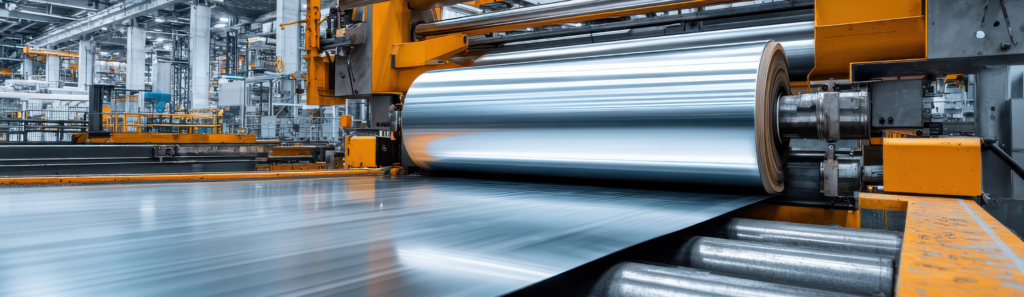
Decarbonising energy-intensive industries cannot be achieved through traditional energy management. These sectors face mounting pressure to cut CO₂ emissions amid high and unpredictable energy costs. Integrating clean technologies like batteries and hydrogen, along with AI-powered optimisation, can help them reduce their environmental impact while maintaining operational efficiency and competitiveness.
Bright Cape provides an AI-driven energy optimisation solution to support the decarbonisation of industrial processes and auxiliary technologies. Deployed by energy-intensive industries, including steel production, medical device manufacturing and other high-energy processes, the system forecasts energy demand and renewable supply, enabling manufacturers to balance grid and locally generated power, reduce peak consumption and lower their carbon footprint — all without disrupting operations.
Achieving circular and resource-efficient manufacturing
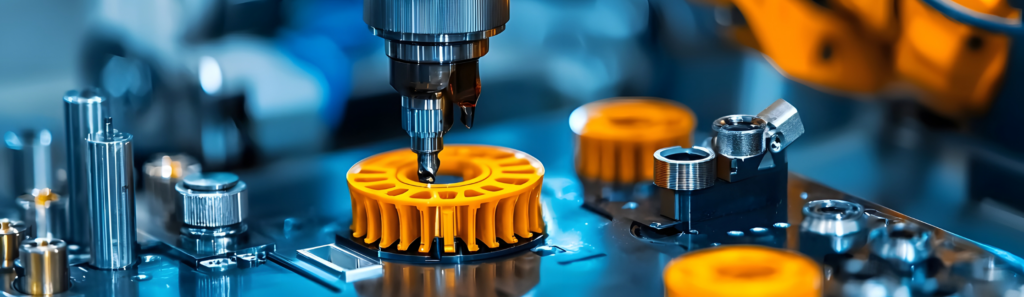
Manufacturers face mounting pressure to reduce material waste and dependency on critical raw materials. This is even more acute for components essential to electrification, like electric motors and actuators. Europe’s high-performance magnets market today is entirely dependent on China, which controls the raw materials supply. Meanwhile, secondary raw materials remain underutilised. To meet sustainability goals and strengthen supply chain resilience, manufacturing is shifting towards “net-positive” operations to design products and processes that reuse, recycle and minimise waste.
Kolektor developed an industrial solution that enables the circular production of permanent magnets through anisotropic 3D printing in a magnetic field. Applied to rotors for brushless DC motors and actuators in automotive, industrial and appliance applications, the technology delivers up to five times faster prototyping and three times lower costs than conventional injection moulding. The process achieves 97% material yield, supports recycled magnetic powders and allows materials to be reused multiple times — drastically reducing waste and reliance on virgin raw materials while maintaining high performance.
Ensuring zero-defect and predictable quality
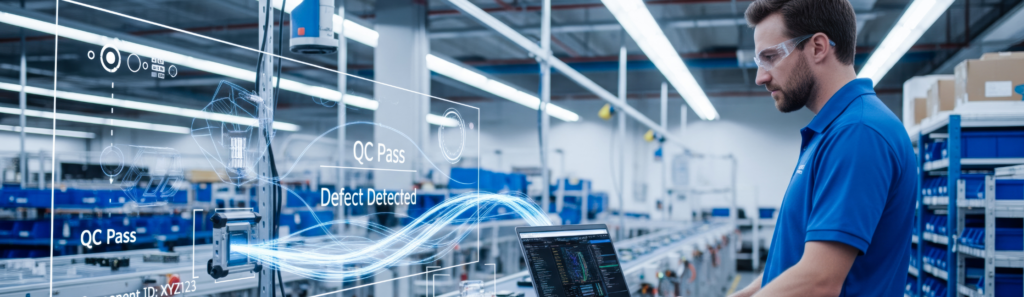
Manufacturing industries find it challenging to maintain consistent product quality in complex, high-throughput production systems. Quality deviations are often detected too late, resulting in scrap, rework, unplanned downtime and inefficient use of energy and materials. To address this, manufacturers need integrated inspection and intelligent monitoring systems that can optimise defect detection and material use, enabling low-waste, high-quality production.
PredictiveDataScience developed an AI-driven software solution for real-time quality monitoring and predictive fault detection. Already adopted in automotive manufacturing plants, the platform monitors critical operations to detect anomalies, predict failures and anticipate quality deviations before they impact production. The system reduces unplanned downtime and allows manufacturers to improve product consistency, lower operational costs and enhance resource efficiency.
Building resilient, transparent and sustainable supply networks

Global trade fragmentation and geopolitical instability are forcing manufacturers to radically redesign traditional supply chains, moving away from single-source dependencies toward diversified, localised strategies with enhanced transparency. However, many companies struggle with fragmented data, manual tracking processes and limited information exchange across suppliers. This results in inefficiencies, reduced visibility and vulnerability to disruptions. The challenge is compounded by increasing regulatory pressure demanding greater traceability and sustainability reporting from raw materials to finished products.
ChainTraced provides a digital traceability platform that automates supply-chain data tracking and enables seamless information exchange across all actors in the value chain. Designed for the metal industry, the platform consolidates critical product and process information through digital product passports that integrate quality data, material specifications and carbon footprint information. By replacing manual, document-based processes with a structured digital approach, ChainTraced enhances collaboration, ensures end-to-end transparency, supports regulatory compliance and enables automated validation of inbound deliveries — reducing administrative burden while improving reliability between supply-chain partners.
Aligning workforce talent and skills needs through upskilling
Skills shortages, shrinking talent pools and high employee turnover are critical obstacles for the industry. Technological change and the green transition are rapidly reshaping skills requirements, but schools and companies struggle to update curricula and training fast enough. Organisations must enable continuous upskilling and reskilling while creating attractive working conditions to prepare the workforce for human-centric, digital and green factories. This requires focused investment in digital literacy, data analytics and knowledge management to sustain competitiveness and bridge the widening skills gap.
The INFINITY project offers a modular digital learning path on green and circular manufacturing, complemented by industry workshops at Kilometro Rosso. The project developed 50 digital lessons and multiple Learning Paths on topics such as green industry fundamentals, environmental, social and governance (ESG); green purchasing and energy, green technologies and additive manufacturing, piloted first with Brembo employees and then rolled out to 17 vocational, education and training (VET) schools, reaching over 1,300 students.
Securing sovereignty and data infrastructure
Hyper-connected factories and supply chains require robust cybersecurity and adherence to EU data sovereignty standards to protect intellectual property and maintain trust. However, manufacturers increasingly struggle to securely access, share and use production data across systems and partners. Fragmented data infrastructures, limited interoperability and concerns around data ownership and cybersecurity hinder the adoption of advanced AI solutions, particularly in complex, high-mix production environments.
LexaTexer provides an AI-based data space and planning solution that enables secure, sovereign use of industrial data for production planning and optimisation. The platform is well-suited for appliance manufacturing and chemical production, as it integrates heterogeneous data sources through a controlled data-sharing architecture, allowing manufacturers to apply AI-driven planning while retaining full governance over their data assets.
Creating safe and human-centric workspaces
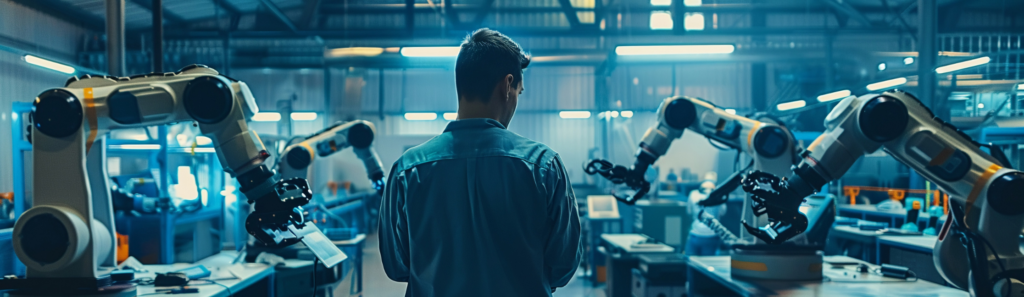
Europe’s workforce remains central to this manufacturing transformation. The industry must prioritise creating safe and human-centric workspaces, ensuring that new AI solutions and collaborative robotics integrate seamlessly with existing workflows, leverage workers’ tacit domain knowledge and adhere to the holistic vision of Industry 5.0, where human wellbeing is central to technological deployment.
RoboTwin enables a human-centric approach to industrial automation, including automotive and manufacturing. Its no-code solution allows operators to demonstrate tasks through natural human motion. Robots learn through motion tracking and imitation, which removes the barrier of complex programming while explicitly leveraging workers’ tacit domain expertise.
While automation advances, traditional manufacturing industries where manual work is a symbol of quality, uniqueness and craftsmanship will remain a hallmark of European quality. However, such industries expose their workforce to musculoskeletal risks, which come from poorly designed workstations, static postures and physically demanding routines.
fleXstructures Italia brings affordable ergonomics to traditional manufacturers. Their 3D computer-aided design (CAD) solution simulates realistic human movements across a full population range, allowing companies to evaluate posture, reachability, task feasibility and ergonomic risk. This enables safer and more efficient workstation design, reduces late-stage changes and accelerates time to production. Tested and validated in the textile industry, it is applicable across industries involving manual work, including automotive, railway, aerospace and defence, white goods, logistics, fashion, chemical and pharmaceutical, food and beverage sectors.
The path to navigating complexities
Stepping into the new technological era will require targeted investment models that connect research, startups and manufacturers, accelerating the transition from laboratory breakthroughs to market-ready solutions. Scaling innovation into market-ready solutions will be even more pressing in high-growth areas where Europe currently lags behind the US and China.
With this Industrial Innovation Report, EIT Manufacturing is setting key priorities for 2026 to support the uptake of innovation and education opportunities across, for and made in Europe.
EIT Manufacturing Industrial Innovation Report 2026
Learn more about the Industrial Innovation Report 2026 and download it here.
Get the latest industry insights
This article is part of the Industry Insights newsletter featuring updates on the most recent trends and policy developments in the manufacturing sector.