

Beyond the cloud: How dataspaces are rewiring Europe’s industrial backbone


4 December 2025
Share



As of 1 March 2026, EIT Manufacturing South East has been integrated into EIT Manufacturing South.
Our Athens office remains fully operational
Across Europe, industries are generating more operational and manufacturing data than at any other moment in history. Yet most of this data remains unused. It sits in isolated systems, proprietary platforms or departmental silos, making it difficult for companies to collaborate, optimise their operations or build visibility across complex supply chains. Even when the willingness to share exists, data is often too sensitive, too fragmented or too incompatible to move across organisational boundaries.
Dataspaces have emerged as Europe’s most advanced response to this problem. Rather than creating yet another centralised platform, dataspaces establish federated, trusted digital environments, where organisations can share and access data securely while retaining full sovereignty over its use. Participants define the usage policies, access rights and governance rules themselves; they remain owners of their assets and share only what they choose. This model marks a decisive shift from traditional cloud or data-lake architectures. It enables interoperability across different systems, providers and countries, while enforcing strict identity management, contractual control and technical trust. For manufacturers and energy operators, the advantages are concrete:
- Real-time visibility across supply chains without exposing competitive information
- Predictive and prescriptive maintenance, reducing outages and operational costs
- Cross-border collaboration that respects EU data protection and sovereignty principles
- Simpler regulatory compliance, especially in highly regulated sectors
- Support for decarbonisation and energy optimisation, where accurate data is essential
A European vision for federated data collaboration
The strategic push behind dataspaces is coordinated at EU level. Initiatives such as Gaia-X, the International Data Spaces Association (IDSA) and the Data Spaces Support Centre (DSSC) are building the technical architecture, governance frameworks and interoperability standards that allow secure data exchange across borders and sectors. Gaia-X in particular aims to ensure that European businesses can collaborate without dependency on closed ecosystems. Its federated services, compliance mechanisms and transparency requirements create a harmonised environment, where data flows with full accountability and traceability.
Greece’s growing role in the European dataspace landscape
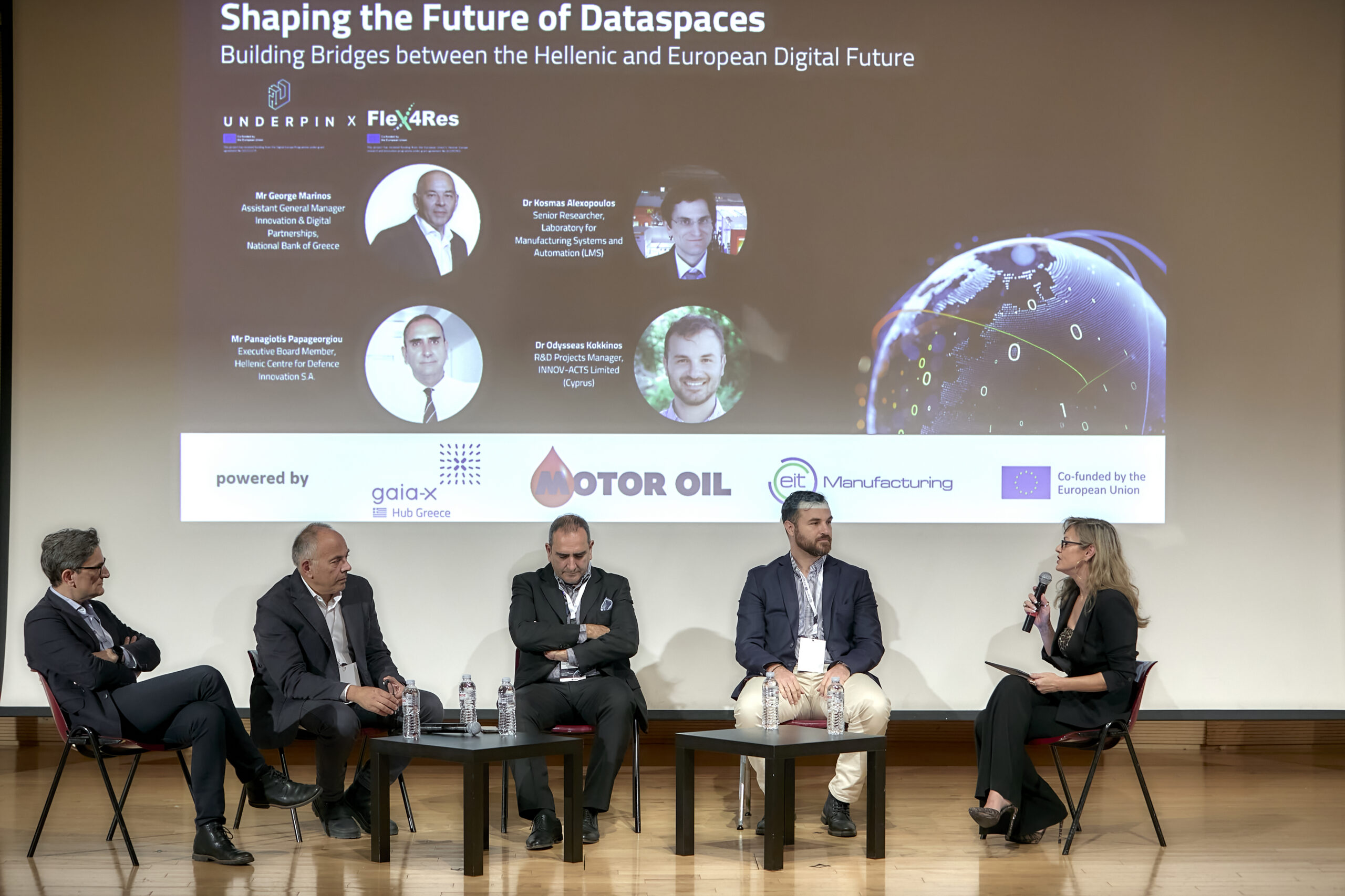
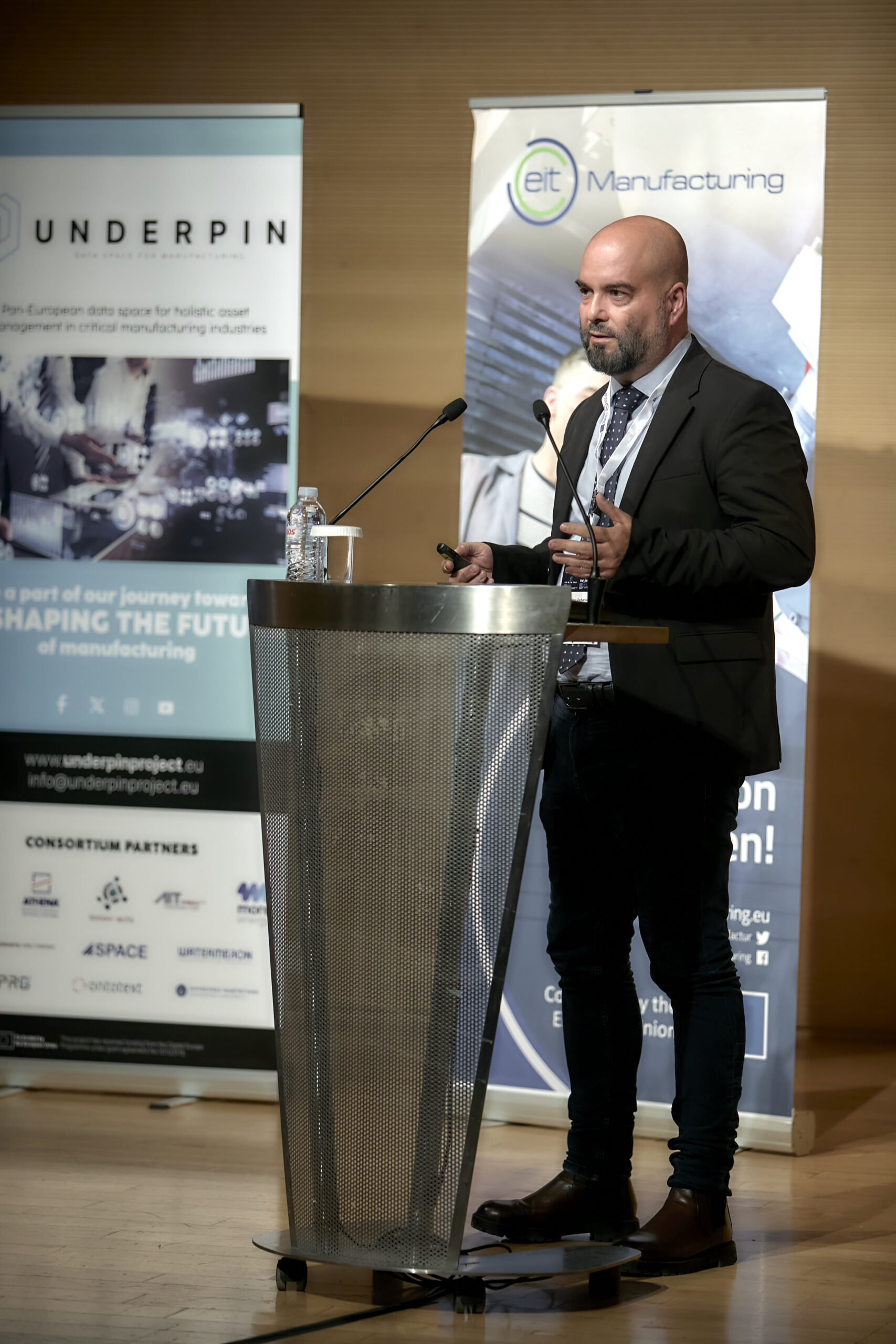
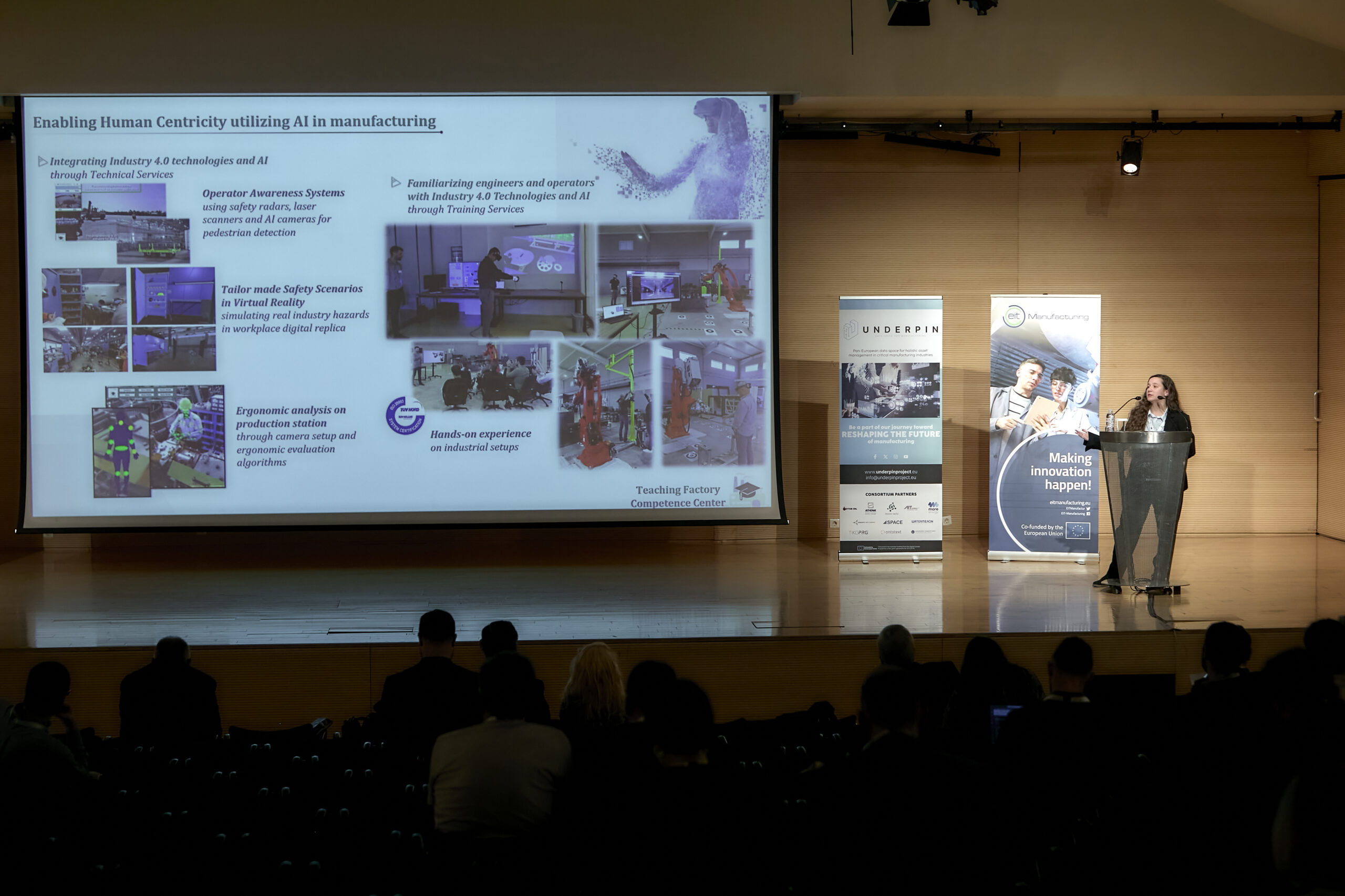
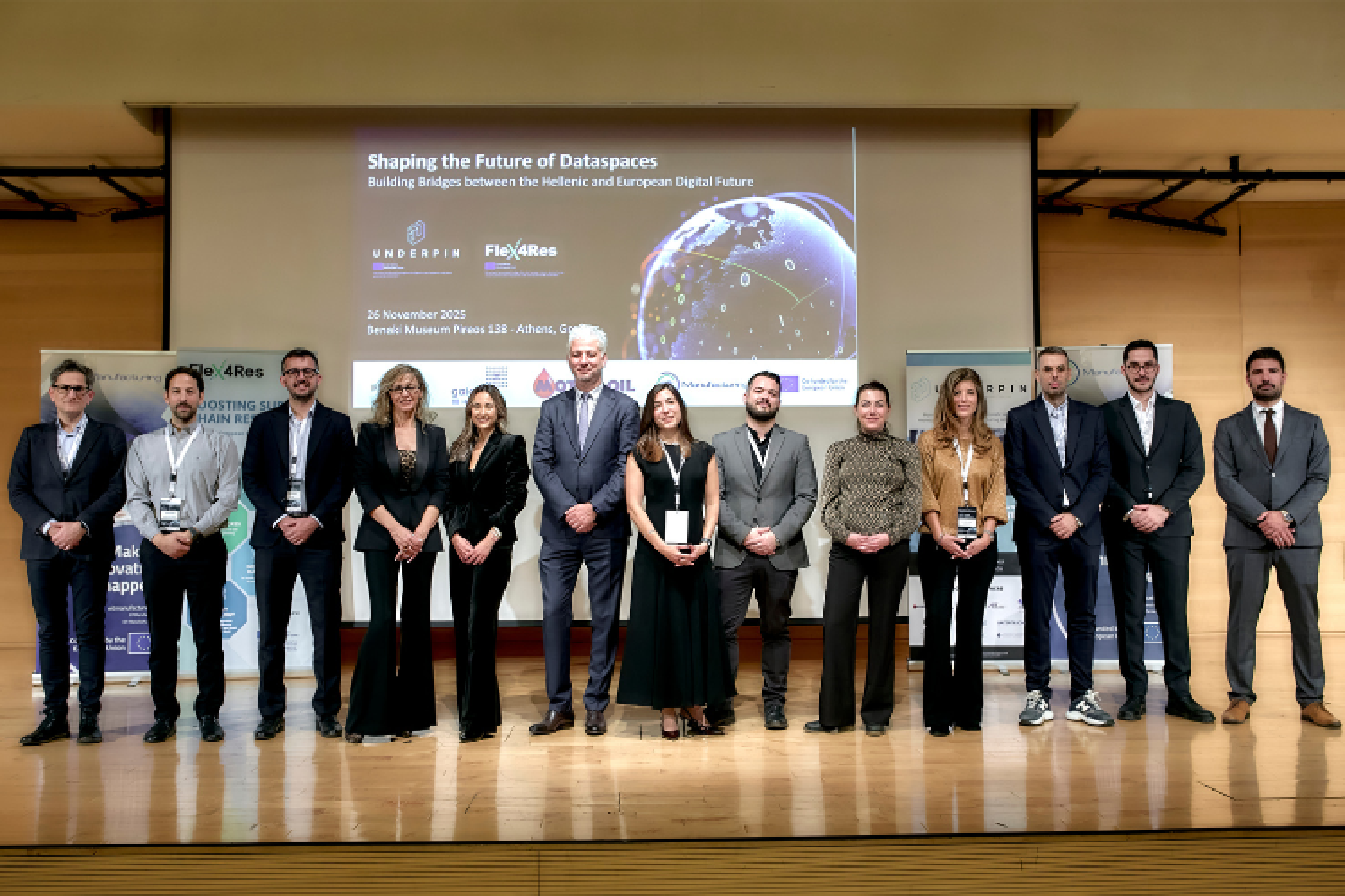
Greece is increasingly positioned within this Europe-wide transformation. At the recent event “Shaping the Future of Dataspaces: Building Bridges Between the Hellenic and European Digital Future”, the discussion in Athens was not celebratory; it was technical and forward-looking.
Two flagship EU funded projects, UNDERPIN and FLEX4RES, demonstrated how dataspaces are operationalised in real industrial environments.
- UNDERPIN showcased its platform for dynamic asset management, enabling predictive and prescriptive maintenance. By combining interoperable data sources with advanced analytics, the project illustrates how dataspaces can reduce operational risks, minimise downtime and optimise asset performance in demanding industrial settings
- FLEX4RES demonstrated how decentralised, sovereign data exchange can enhance the resilience and sustainability of European production networks. Its work highlights the role of dataspaces in supporting flexible manufacturing lines, improving transparency across value chains and enabling energy-efficient operations
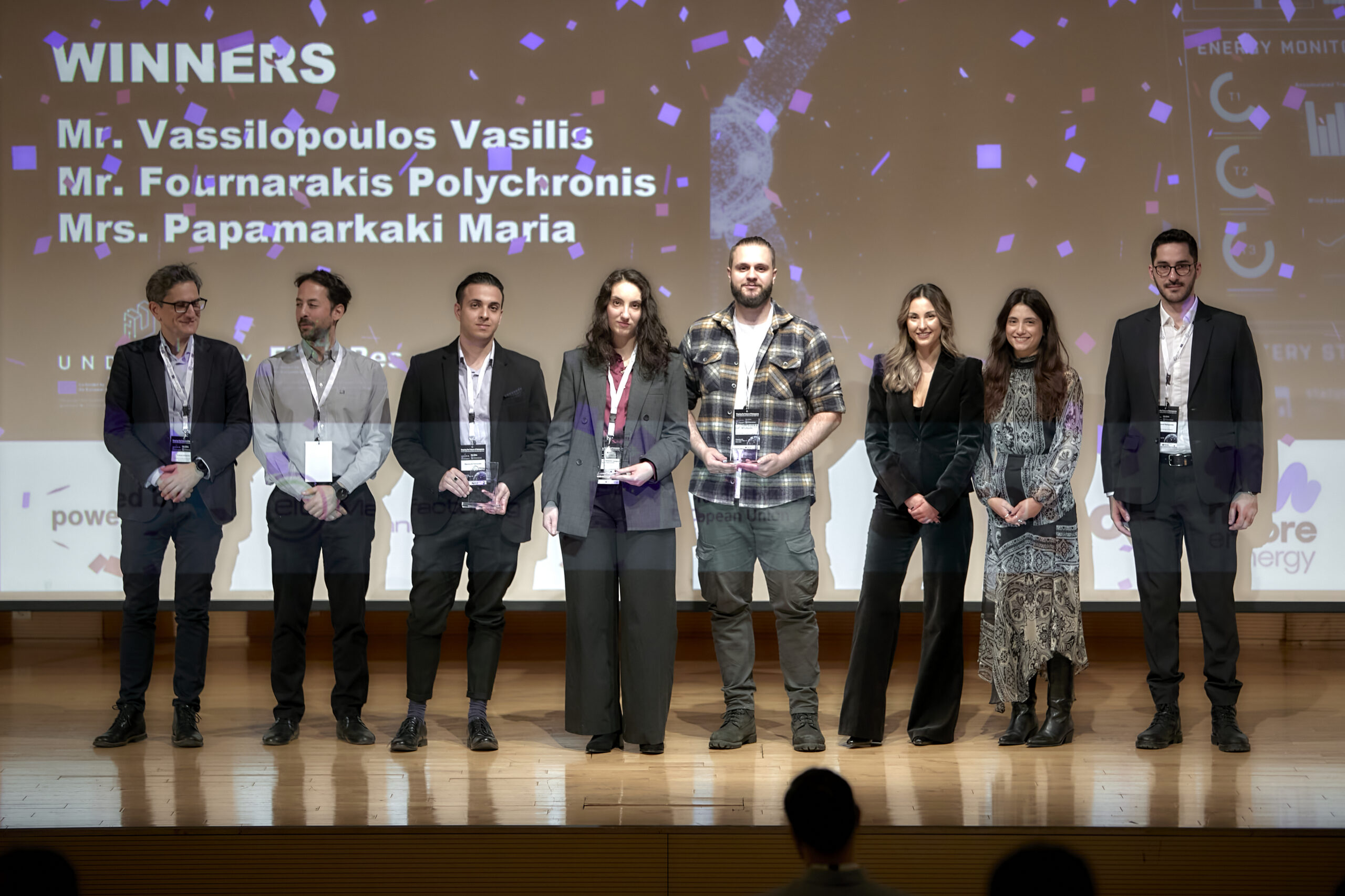
Complementing these demonstrations, industrial partners such as Motor Oil Hellas and SIDENOR shared real-world success stories on how data-enabled operations are already transforming daily practice. The event also highlighted the next generation of data-skilled professionals through the TORPEDOES Datathon. Unlike traditional hackathons, TORPEDOES focused on real industrial datasets and operational conditions. Students worked with live wind-turbine sensor data supplied by MORE (Motor Oil Renewable Energy) to develop predictive-maintenance models capable of identifying early-stage turbine anomalies. The challenge illustrated how federated data access can support renewable energy optimisation by reducing downtime, improving asset reliability and enabling more stable energy output. The winning team demonstrated how data sharing and analytics can produce practical, deployable solutions, underscoring the role of dataspaces in strengthening both industrial innovation and workforce readiness.
A coordinated movement towards data-enabled industry
Dataspaces represent a shift in how Europe intends to innovate: not by centralising data but by federating it. This approach strengthens digital sovereignty, enhances industrial competitiveness and enables sustainability strategies that depend on high-quality, shareable data.
Greece’s engagement shows how national initiatives can amplify (and benefit from) Europe’s overarching vision. Organisations such as EIT Manufacturing play a critical role in this transition by connecting industrial actors, transferring knowledge and helping companies adopt dataspace technologies in a way that leads to measurable impact. As Europe continues to scale its federated data infrastructure, manufacturers, energy providers and innovators across the continent are better positioned to participate in data-driven value networks with confidence and clarity.
Photo credits: Konstantopoulos Vasilis