

Collaborate, automate, decarbonise: What’s driving industrial innovation in Europe


12 June 2025
Share




As of 1 March 2026, EIT Manufacturing South East has been integrated into EIT Manufacturing South.
Our Athens office remains fully operational
As global manufacturing responds to shifting geopolitics, climate urgency and persistent supply chain volatility, one thing is clear: innovation can no longer happen in isolation. Across Europe and beyond, strategic collaboration is rapidly emerging as the cornerstone of industrial transformation, driving not only resilience but long-term competitiveness. Industrial players, startups, research institutions and investors are increasingly converging around shared challenges: digitalisation, automation, sustainability and talent development. Together, they are shaping a more distributed, ecosystem-driven model of innovation.
Four key forces are currently steering Europe’s industrial transformation.
- Collaboration has become the primary response to growing technological and operational complexity. From electrification in the automotive sector to decarbonisation in logistics and heavy industry, the transformation agenda is now too broad and capital-intensive for any single company to address alone. Leading industrial players, such as Mercedes-Benz Türk, Arçelik and Ford Otosan, are increasingly relying on cross-sector partnerships, working closely with suppliers, startups, universities and European innovation programmes to accelerate product development, distribute risk and bring new technologies to market faster. Structured collaboration platforms, such as EIT Manufacturing’s Teaching Factory Competence Centre, are enabling companies to co-develop and pilot solutions directly with academic teams in real industrial environments.
- Artificial intelligence (AI) and automation are no longer optional add-ons; they are becoming factory-floor fundamentals. From predictive maintenance and digital twins to automated quality inspection and real-time production optimisation, AI is redefining manufacturing as a network of intelligent systems rather than isolated mechanical processes. Startups like Fizix, Simularge and Inovako are paving a good way towards charge, offering scalable solutions that cut costs, reduce downtime and unlock operational agility. Their technologies are already being piloted by major industrial players seeking speed and precision.
- Sustainability is rapidly evolving from compliance obligation into a central competitive strategy. The environmental impact of industry is now actively shaping how manufacturers select suppliers, design products and prioritise technology investments. Startups like Carbon Gate, which supports companies in building structured carbon-neutrality strategies, and HELIOS, which is developing nano-technology solutions for decarbonisation, represent a fast-growing field of eco-industrial innovation. These technologies are increasingly integrated into core operations, not treated as peripheral add-ons.
- Talent development is struggling to keep pace with technological acceleration and collaboration is once again the key bridge. Europe’s ability to lead in advanced manufacturing depends on a workforce capable of operating within increasingly automated, AI-driven production environments. While universities and training providers are adapting, aligning education with fast-evolving industrial needs takes time. That is why direct collaboration between industry, research and education has become essential not only to drive innovation, but also to develop the skills required to sustain it. Companies such as Arçelik are already working directly with education partners to build targeted training pathways in robotics, simulation and advanced materials, while structured initiatives such as the EIT Manufacturing Venture Building Programme and Access2Tech are supporting startups with not only funding but also industrial validation, market context and real-world testing opportunities.
Access2Tech Europe – Izmir: A snapshot of Turkish and European industrial innovation
This shift is particularly visible in Türkiye, where industrial digitalisation is accelerating and aligning closely with European innovation ecosystems. A strong example of this momentum was the Access2Tech Europe I İzmir feat. IndustX Demo Day, hosted on 27 May 2025 at the İzQ Innovation Centre in İzmir. The event was organized by EIT Manufacturing South East and FarkLabs, with the support of TAYSAD, Arkas Holding, Cevher Group, Norm Holding and Farplas Automotive.
More than 200 participants attended, including representatives from over 100 corporates and institutions, 40 jury members and more than 22 startups, demonstrating the scale and maturity of the regional innovation community.
Following a competitive selection process through the IndustX Innovation Call, the most promising startups pitched their solutions live on stage. An expert jury drawn from leading industrial organisations including Mercedes-Benz Türk, Ford Otosan, Norm Holding, Cevher Group, Farplas Automotive, Maxion İnci & Maxion Jantaş, Toyotetsu and İnci Holding selected eight champion startups.
- The First Place Award was presented to WISERSENSE / FIZIX, an EIT Manufacturing South East–supported startup, for its end-to-end smart machine health monitoring solution, along with a fully sponsored booth at CES Las Vegas.
- The Second Place Award was given to Carbon Gate for its sustainability-driven carbon neutrality ecosystem.
- Simularge Global received the Third Place Award for its CAE and digital twin solutions.
Crucially, the event also generated four Paid Proof of Concept (PoC) agreements, creating immediate pathways to market.
- Inovako secured two Paid PoCs: one with Farplas Automotive for its AI-powered quality inspection and computer vision systems and another with Norm Holding for industrial AI applications in smart manufacturing.
- THEYEQ received a paid PoC with Cevher Group for advanced industrial measurement and control systems.
- NAVLANDIS secured a Paid PoC with Arkas Holding for smart, foldable container solutions aimed at revolutionising freight logistics.
Special EIT Manufacturing distinction awards were also presented.
- HELIOS received the Access2Tech Award for its nano-solutions targeting a carbon-free world, accompanied by six months of free collaboration support.
- Lumos Laser received the Access2Market Award and dedicated market-entry support.
- Inovako also received the AI Award for its industrial computer vision technologies.
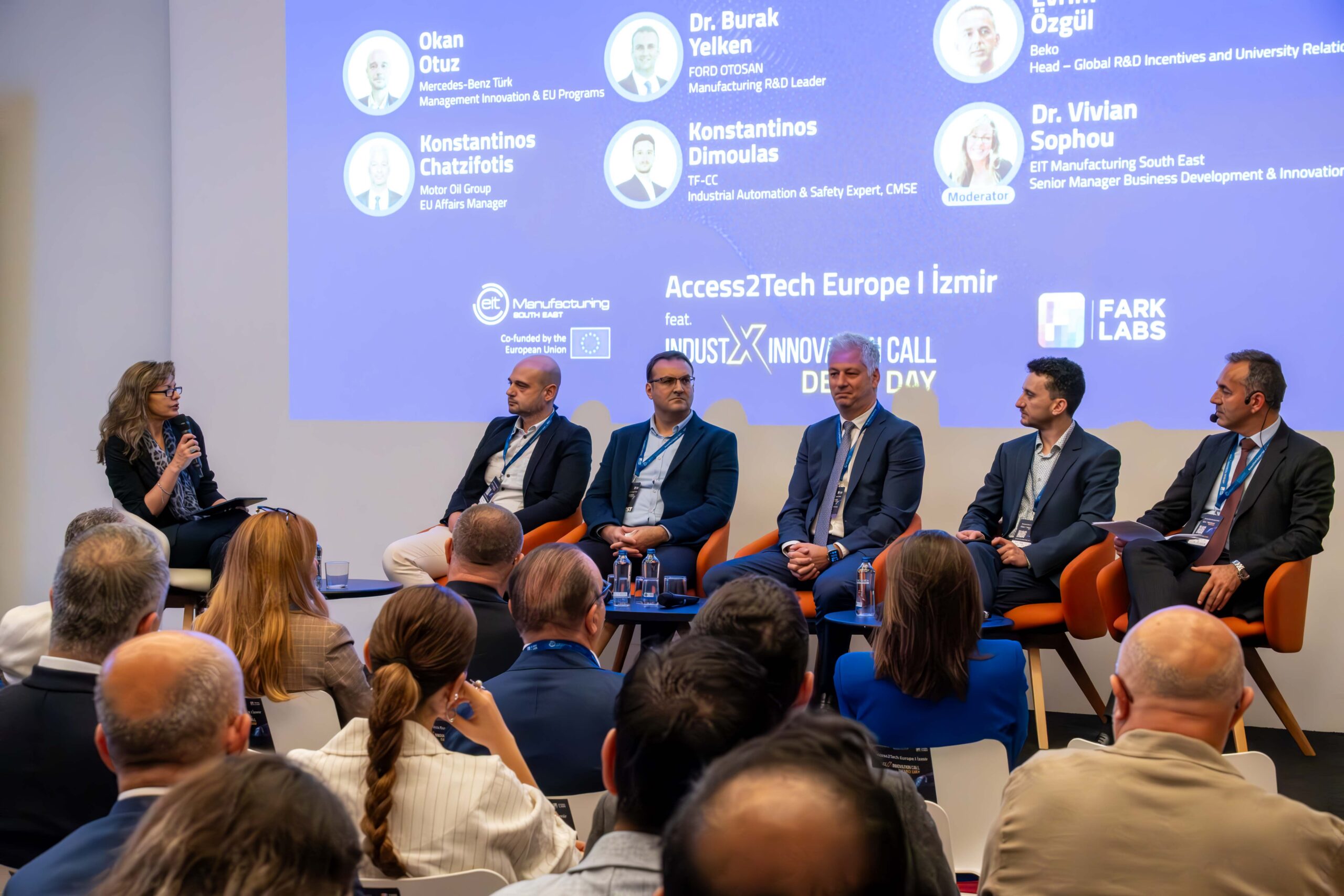
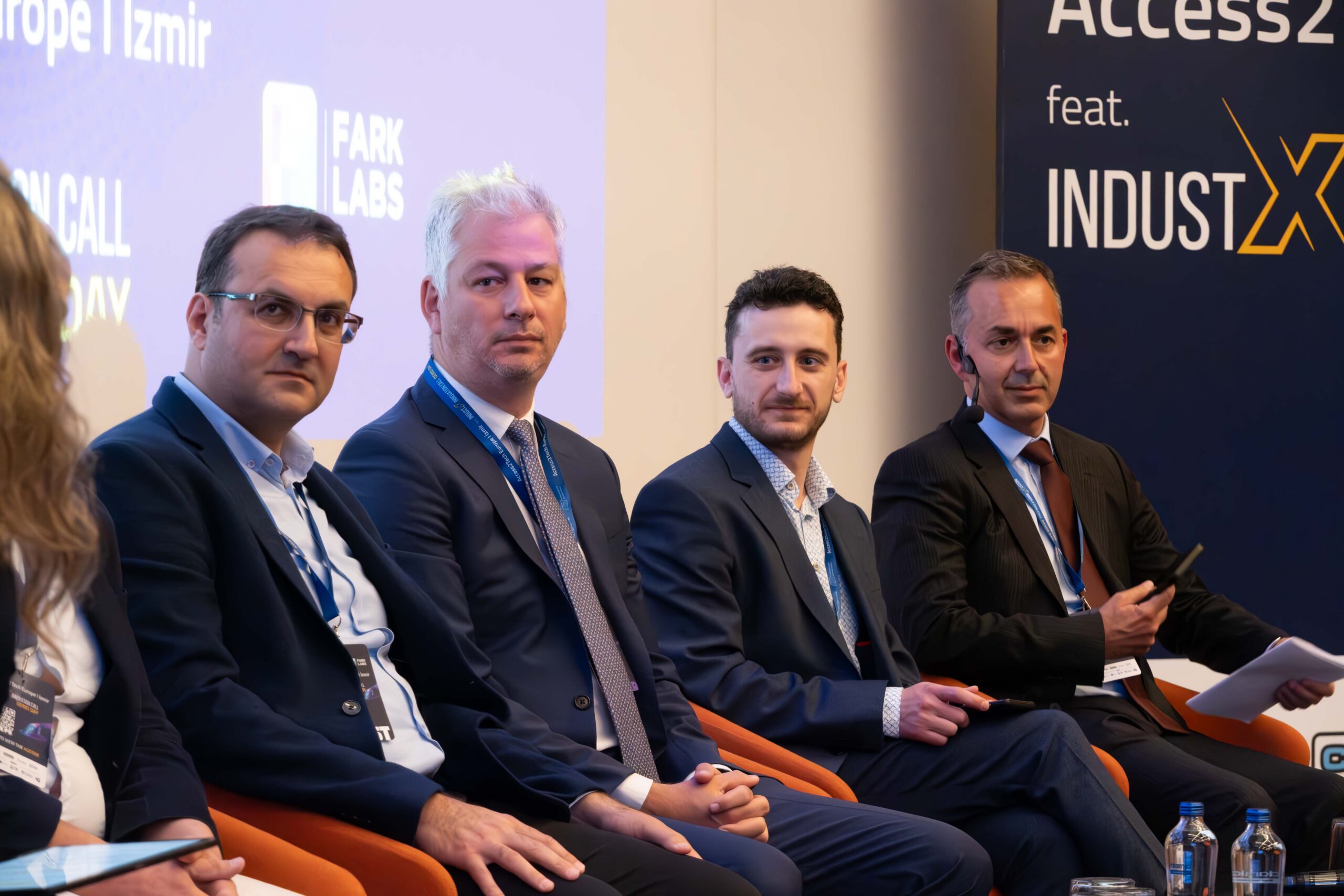
The strategic depth of the event was reinforced through a high-level industrial panel discussion on “Industrial Transformation Through Strategic Collaborations in a Changing Geopolitical Landscape”, featuring core industrial leaders from Mercedes-Benz Türk, Ford Otosan, Motor Oil Group, Beko Global and the Teaching Factory Competence Centre, moderated by EIT Manufacturing. Alongside this, targeted B2B matchmaking and one-on-one meetings enabled direct engagement between startups and corporates from the automotive, energy, shipping and manufacturing sectors, including Arçelik, Arkas Holding, Cevher Group, Norm Holding and Farplas Automotive.
As a pan-European organisation, EIT Manufacturing supports the stakeholders advancing innovation and delivering results. The impact of the event is already visible: factory visits and concrete collaboration plans have been initiated with Cevher Group and Norm Holding, Paid PoC projects are moving into execution, while HELIOS and Lumos Laser are receiving structured support for market access and product development. FarkLabs continues to accelerate the participating startups, ensuring that the momentum generated translates into long-term market traction.