



Default setting: Innovation for inclusive manufacturing


31 March 2026
Share




Around 42.8 million persons with disabilities of working age live in the EU, but only about half are employed (European Commission). At the same time, the transition to advanced manufacturing faces acute skills shortages in robotics, data analytics and cybersecurity. 70% of employers report difficulties in finding qualified talent, while over 20 million people remain an untapped talent pool (EURLALL).
The paradox is striking: the technologies capable of making factories more accessible — from AI interfaces to wearable robotics — already exist. Yet many workplaces are still designed around a narrow definition of the “standard worker”. What if inclusion became the default setting for manufacturing innovation instead?
Today, we look at the projects already turning this idea into reality on the shop floor. The solutions were supported through the EIT Manufacturing RIS Inclusiveness initiative, a finalist of the European Association Awards 2026 by ESAE – European Society of Association Executives in the diversity, equity and inclusion (DEI) category. These solutions come from organisations from emerging countries, making industrial workplaces more accessible while helping companies become more resilient and competitive.
Health challenges in industrial work
Musculoskeletal disorders (MSDs) remain one of the most pressing health challenges in industrial work. In Germany alone, they account for around 25.6% of all sick leave days (German Social Accident Insurance – DGUV). Across the EU, workers affected by MSDs are more likely to take longer and more frequent absences (EU‑OSHA). Back pain and upper-limb disorders consistently rank among the most common work-related health issues across Member States (Eurostat, 2020).
These conditions are particularly prevalent in sectors such as manufacturing, construction and logistics, where repetitive tasks, heavy loads and poor ergonomics are part of daily operations. Exoskeletons are emerging as a promising solution.
From sci-fi to manufacturing
While exoskeletons may seem like a sci-fi invention, in reality, these wearable devices support workers during physically demanding tasks such as lifting, overhead work or maintaining awkward postures. Rather than replacing people, they act as a human augmentation layer, reducing strain on the back, shoulders and joints.
They typically come in two forms: passive (unpowered) systems, which redistribute loads using mechanical elements and active (powered) systems, which provide additional force through motors. In manufacturing today, lighter and cheaper passive back and shoulder support exoskeletons are the most widely deployed.
Exoskeletons could also help close the gender gap in physically demanding fields. For the construction industry alone, the recent study found a strong negative correlation between the physical ability levels required in construction occupations and women’s representation in those roles, representing around 25% gender gap in employment. Wearable exoskeletons that enhance strength, balance and manual dexterity could help narrow this gap, potentially improving access to some of the higher-paying occupations that have remained out of reach.
Exoskeletons to change the way people work
To widely adopt exoskeletons, companies still struggle to determine which solutions work, for whom and under what conditions.
The NEXUS project, led by CTAG – Centro Tecnológico de Automoción de Galicia, introduces a counselling and assessment service supported by a hardware–software platform that evaluates how different exoskeletons perform for specific users and tasks. By combining data from multiple sensors and wearable devices, NEXUS enables a more precise understanding of how these technologies impact ergonomics, safety and overall performance.
The main blocker is not a single factor, but a combination of uncertain return on investment and lack of solid evidence, especially for workers with disabilities.
Erika Triviño, Human Factory Project Leader at CTAG
“While cost plays a role, the key issue is that companies, particularly ergonomics and EHS (environmental, health and safety) professionals, can’t clearly demonstrate that exoskeletons reduce risk or improve productivity in these cases, where high functional variability makes standardisation difficult”, says Triviño.
Moreover, these stakeholders apply strict criteria: proven risk reduction, no introduction of new hazards, task compatibility and user acceptance. Currently, there are still doubts about real-world performance, individual adaptability and seamless integration into workflows. In addition, liability concerns, lack of clear standards and implementation complexity further limit adoption.
“Overall, the blocker is a high perceived risk combined with still insufficiently validated benefits and challenges in meeting ergonomic and operational requirements”, concludes Triviño.
Building evidence in a regulatory grey zone
As the regulatory framework is still being formalised, Triviño shares CTAG’s approach in navigating the so-called regulatory grey zone by creating their own structured evaluation framework: “We combine objective data, like muscle activity, metabolic cost or task performance, with subjective feedback from the user, all collected through our platform and integrated with the Kinexa environment. This allows us to generate reliable, personalised indicators of safety, performance and acceptance for each case.”
“Of course, the lack of regulation does create some hesitation, mainly around liability and standardisation. But interestingly, that’s exactly where NEXUS adds value: we don’t remove the regulatory gap, but we reduce uncertainty by providing evidence-based assessments, helping companies make more informed and confident decisions when piloting exoskeletons”, says Triviño.
A key component of the project is its integration with Kinexa, a modular, sensorised environment that simulates real industrial workstations. This allows exoskeletons to be tested in conditions that closely reflect actual manufacturing settings — an important step in a field where standards and regulations are still evolving.
Adapting exoskeletons to individual needs
In practice, the assessment process is designed to reflect real working conditions while remaining tailored to each individual.
Before the session, the team analyses the worker’s tasks and profile to select the appropriate exoskeleton and sensors. During the assessment, the worker performs typical tasks while the system collects synchronised data such as muscle activity, motion and task duration, alongside feedback on comfort and effort. This combination of objective and subjective data is then used to generate a report and recommend the most suitable solution.
In addition to initial adoption, the project also addresses workers with newly acquired disabilities — a particularly sensitive moment in a person’s career. NEXUS approaches this as a collaborative, user-centred process. Workers are actively involved in selecting and evaluating solutions, combining technical data with personal feedback. This turns the assessment into a support tool that fosters autonomy, confidence and long-term participation in the workforce.
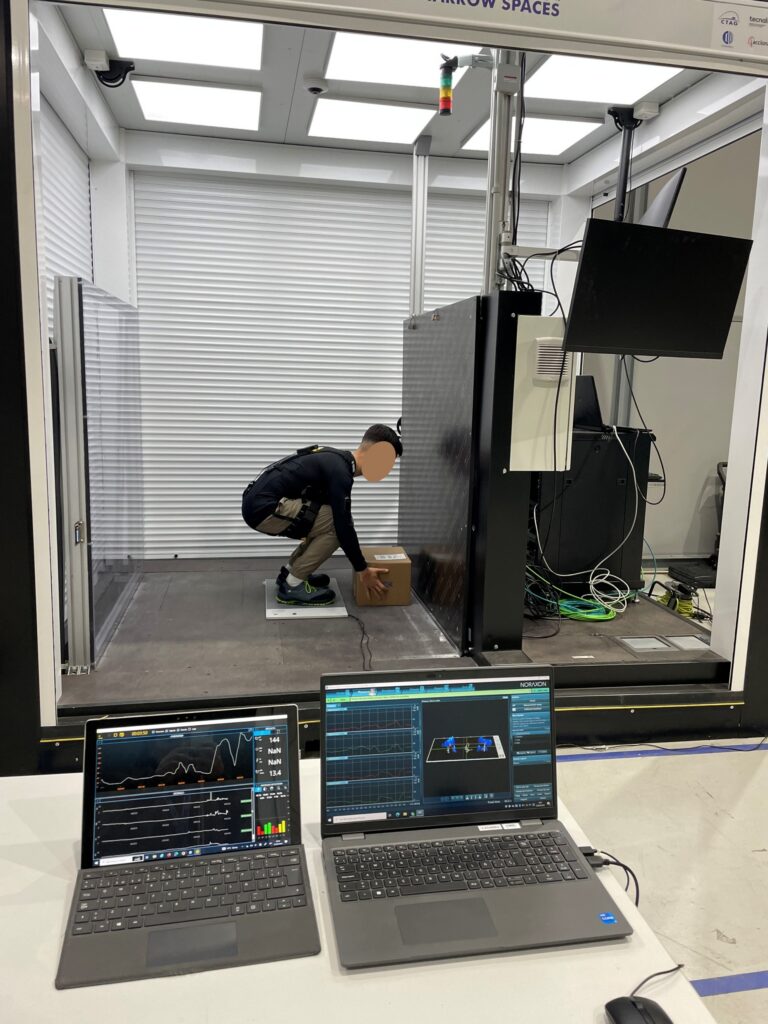
NEXUS testing session. Copyright (c) CTAG
Beyond accessibility: performance gains in manufacturing
Beyond accessibility, wider adoption of exoskeletons could significantly reshape manufacturing work. “Exoskeletons have the potential to change the way people work in manufacturing”, says Triviño.
By reducing physical strain and the risk of musculoskeletal injuries, exoskeletons enable individuals with different physical abilities to perform tasks safely and sustainably. This also helps retain experienced workers, extending their careers and keeping valuable expertise in the workforce. At the same time, exoskeletons allow for greater flexibility and adaptation in tasks, so workstations and processes can accommodate a wider range of physical abilities.
“This fosters a more inclusive culture, where decisions are based on skills and experience rather than physical limitations”, shares Triviño. Integrating these technologies also drives innovation and social sustainability, creating factories that are safer, more productive and equitable.
Over time, this could redefine manufacturing as a sector where inclusion and performance go hand in hand, demonstrating that technological support can enhance both human potential and operational efficiency in a meaningful way.
Erika Triviño, Human Factory Project Leader at CTAG
The “invisible” need for inclusion
Physical support is only one dimension of an accessible factory floor. In manufacturing, where auditory signals dominate safety systems, deaf and hard-of-hearing (DHH) workers face acute risks of missing alarms, horns and shouted warnings during emergencies. The barrier is not ergonomic — it is communicative. This communication gap excludes them from independent operation and compromises factory safety for all in noisy environments. It creates barriers not only during emergencies, but also in everyday operations such as training, maintenance and task coordination. The scale of challenge is significant: in the United States alone, around 46% of manufacturing workers are exposed to hazardous noise, while nearly one in five report hearing difficulties (NIOSH).
Moreover, DHH workers face “invisibility” barriers, as hearing loss is often not recognised as disability, leading to denied accommodations (European Federation of Hard of Hearing – EFHOH). The EFHOH report further unveils that 59 million people in Europe are experiencing hearing loss, while many still face significant barriers to employment, with around 40-44% in employment in 2013, 2015 and 2019, confirming that hearing loss continues to be a significant barrier to equal access to work in the EU. Only around 30% of countries — mainly in Northern and Western Europe — report effective mechanisms supported by strong policies and welfare systems (EFHOH).
“Ultimately, these communication gaps impact the individual’s safety, productivity and job satisfaction but also present challenges for companies striving to maintain efficient and inclusive operations”, shares Vassilis Papataxiarhis, Managing Director at Intellia.
SpeakAR project, led by Intellia, addresses this gap through an augmented reality (AR) communication system that translates spoken language into sign language in real time.
From speech to sign: how the system works
SpeakAR combines AR glasses with AI-based translation to enable real-time communication on the factory floor. “When a manager or colleague speaks, the system captures the spoken language and uses an AI-driven translation model to interpret it with high accuracy and speed”, explains Papataxiarhis. This spoken input is translated into sign language, text instructions or visual cues, displayed to the user through their AR glasses.
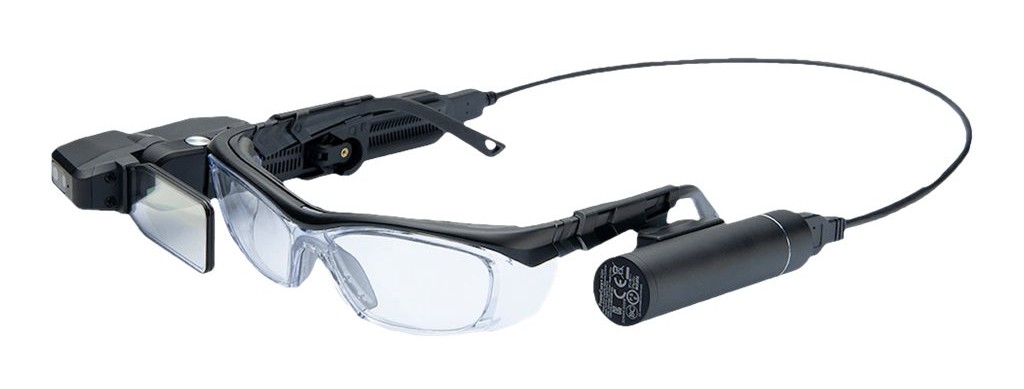
AR glasses. Copyright (c) Intellia
The system is optimised for industrial environments, recognising common phrases and commands used in manufacturing. By delivering instructions instantly and visually, it allows workers to understand and act without delay or reliance on external assistance.
Rethinking communication on the factory floor
SpeakAR has the potential to reshape collaboration across the factory floor.
SpeakAR empowers employees with disabilities to perform their roles independently, eliminating the need for interpreters and fostering a more seamless exchange of information among team members.
Vassilis Papataxiarhis, Managing Director at Intellia
Crucially, SpeakAR is not a one-way channel. DHH workers can communicate back to remote engineers and experts via audio and video directly through their glasses, requesting support, flagging issues and participating in problem-solving on their own. The system also includes map visualisation showing peer locations on the factory floor and barcode and QR-code scanning for routine checks.
By enabling direct, real-time communication between workers, technicians and remote experts, the system allows teams to interact more seamlessly. DHH workers can participate more fully in training, operations and problem-solving processes, improving both efficiency and inclusion.
A safer factory for everyone
Testing the system in real factory conditions revealed that communication challenges extend beyond individual users.
Heavy reliance on auditory signals creates communication gaps that can affect all workers, especially in loud, safety-critical environments.
Vassilis Papataxiarhis, Managing Director at Intellia
Introducing visual and AR-based alerts ensures that all workers can receive critical information in real time. SpeakAR has achieved 87% success rate in operational simulations for task completion and communication effectiveness, demonstrating its broad usability.
“Once AR equipment evolves to fully support continuous operations (e.g., by achieving lighter weights and energy autonomy for eight-hour shifts), implementing such technology universally will become highly feasible, making manufacturing more accessible, safer and efficient for the entire workforce”, says Papataxiarhis.
AI for everyone: breaking the expertise barrier
While physical and communication barriers are becoming more visible, a third layer of exclusion is emerging in modern factories — access to complex digital systems.
Predictive maintenance is one of the most valuable applications of AI in modern manufacturing. It reduces downtime, extends equipment life and improves safety. In most of its current implementations, it also requires a level of technical expertise that places it out of reach for large parts of the workforce. With 63% of employers identifying skills gaps as the biggest barrier to business transformation (World Economic Forum), making AI tools accessible becomes more urgent.
Advanced AI tools like predictive maintenance platforms are becoming essential in modern factories, but they also create significant barriers for workers with disabilities, mainly due to their high complexity and the need for specialisation in new technologies. Their user interface is most often designed for experts, requiring expertise in data and parameters that are not easily understandable and accessible.
Vassilis Papataxiarhis, Managing Director at Intellia
The consequences extend across different groups. For workers with visual disabilities, the absence of audio guidance limits interaction. For those with cognitive difficulties, information complexity increases errors and workplace stress. For older workers with limited digital skills, adapting to these systems is a significant hurdle. As Papadatos puts it, “these barriers lead to exclusion from critical processes, reduced productivity and limited participation in Industry 4.0 environments.”
An assistant that learns with you
The Optiplant4All project, developed by Neuron AI, addresses this by extending the company’s existing Optiplant predictive maintenance platform with an Intelligent Personal Assistant (IPA) built on automated machine learning (AutoML) technology, making advanced data analytics accessible to everyone, regardless of disability, technical background or age.
In practice, the platform offers different interaction modes: text-to-speech for users with visual impairments, simplified instructions for those with cognitive difficulties and accessible dashboards for non-expert users. What sets it apart is that it does not rely on a fixed set of accessibility options — it learns. The IPA records how each user responds to instructions, how long tasks take, where difficulties arise and what type of support they prefer — visual, audio or simplified — then adapts its notifications, level of detail and data presentation accordingly.
“Personalisation starts from the first interactions but becomes essentially effective within a short period of use, as the system continuously learns and self-improves, leading to an experience that becomes increasingly supportive and natural for the worker”, says Papadatos.
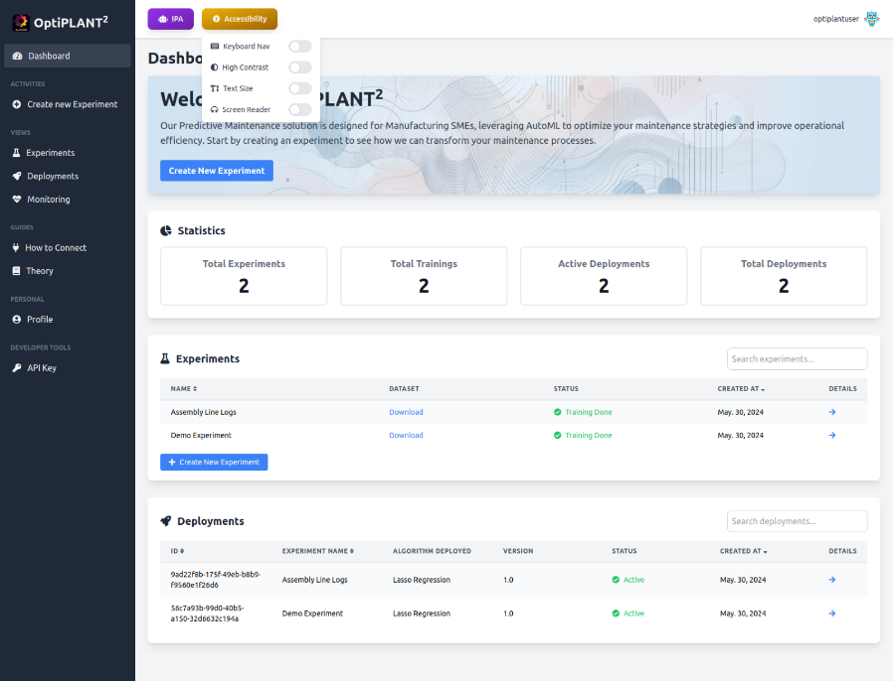
Optiplant platform for predictive maintenance. Copyright (c) Neuron AI
When guidance under pressure works for everyone
Perhaps the most revealing finding from Optiplant4All’s testing concerns a feature designed for workers with cognitive disabilities: step-by-step verbal guidance triggered when equipment is predicted to fail. In high-pressure moments that demand an immediate response, the system provides structured instructions rather than complex data dashboards.
Testing showed the benefit extends well beyond its original target group. “During our tests, it was observed that simplified, clear and voice guidance helps reduce errors and manage work stress”, shares Papadatos.
In critical moments, where immediate response is required, the system acts as a ‘digital assistant’, offering structured instructions instead of complex data. This leads to better decisions while also increasing productivity through the more effective use of predictive maintenance.
Panos Papadatos, Project Manager at Neuron AI
EU cognitive accessibility research confirms simplified guidance benefits all users (European Commission). A solution designed around the most excluded user turns out to be a better tool for the whole factory floor under pressure.
Innovation that serves talent
These projects reveal a consistent pattern: personalised assessment and real-time adaptation prove that designing for inclusion improves performance for all workers. Innovation has another side to the competitive edge in manufacturing — one that goes beyond efficiency and automation. By making accessibility the default setting, manufacturers build operations that are more resilient, more innovative and richer in talent.